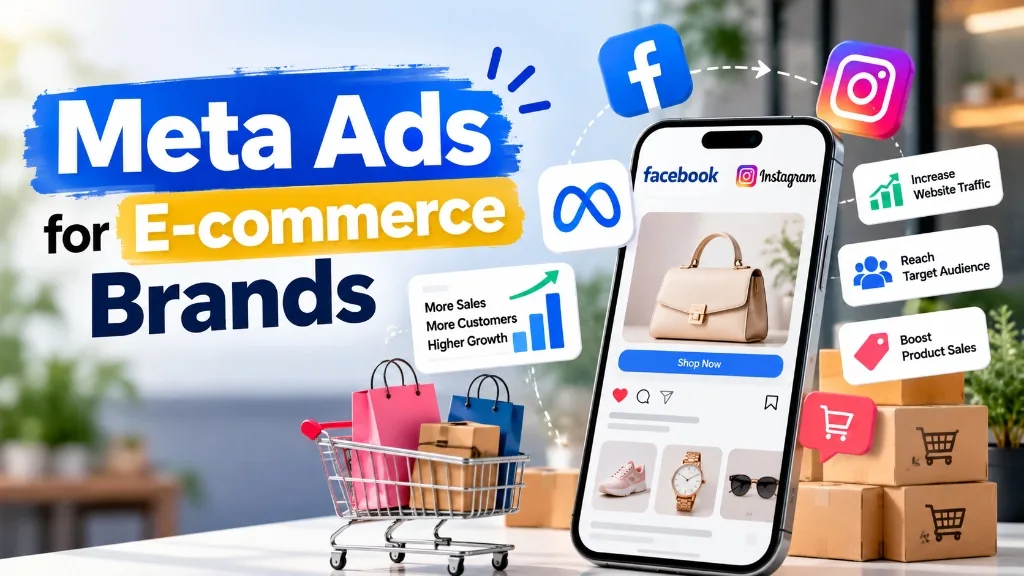
Meta Ads (Facebook and Instagram) remain the most scalable direct-to-consumer acquisition engine available for online stores today. However, treating Meta Ads as a mere "boosted post" or a one-off campaign leads to burning cash. Sustainable, high-ROAS e-commerce growth demands high-velocity creative testing, full-funnel retargeting, frictionless offers, server-side tracking (CAPI), and relentless focus on contribution margins rather than vanity metrics. When executed correctly, Meta Ads build a predictable machine that turns cold scrollers into repeat paying customers.
Meta Ads can be a powerful way for e-commerce brands to reach the right customers, showcase products, and increase online sales. Platforms like Facebook and Instagram allow businesses to target audiences based on interests, behaviors, demographics, and online activity. However, successful Meta advertising is not just about boosting a post or spending more money.
Brands need strong creatives, clear offers, the right audience, and continuous campaign optimization. From introducing products to new customers to bringing back people who visited your website but did not purchase, Meta Ads can support customers throughout their entire buying journey. With proper tracking and regular testing, e-commerce brands can improve their advertising performance and build a more consistent flow of qualified traffic and profitable conversions.
At Growell Marketing, our performance marketing team manages full-funnel media buying across thousands of ad impressions daily. Whether you are launching your first Shopify or WooCommerce store or scaling an established brand beyond 7 figures, here are the 10 foundational strategies that separate market leaders from brands struggling with high CPAs.
The Modern E-Commerce Meta Funnel Blueprint
Before launching individual ad sets, structure your campaigns into a cohesive full-funnel system:
10 Core Strategies for Meta Ads in E-Commerce
1. Define Your Target Audience
Identify who is most likely to buy your products and create audiences based on relevant demographics, interests, behaviors, and customer data. In the past, advertisers built dozens of micro-segmented ad sets targeting narrow interest keywords. Today, Meta's artificial intelligence has evolved dramatically.
The modern approach to audience targeting:
- Broad Targeting: Strip away restrictive interest filters and let Meta's machine learning match your ad creative directly to potential buyers based on their browsing behavior and platform activity. In modern media buying, creative is the new targeting.
- Advantage+ Shopping Campaigns (ASC): Meta's flagship e-commerce ad product. ASC automates audience combinations, testing thousands of creative and placement variations to maximize purchase volume at the lowest cost.
- High-Value Lookalikes: Build 1% to 2% Lookalike Audiences derived from your top 20% highest lifetime-value (LTV) customers and recent 180-day purchasers, rather than simple website visitors.
2. Use High-Quality Product Creatives
Attractive product photos, short videos, Reels, and UGC-style content can grab attention and communicate your product benefits quickly. On Instagram and Facebook feeds, you have less than 1.7 seconds to capture someone's attention before they swipe past.
To win on visual feeds:
- Embrace User-Generated Content (UGC): High-polish studio commercials often look like blatant advertisements and get ignored. Authentic videos shot on smartphones featuring real customers unpacking, using, and reviewing the product consistently beat professional agency shoots.
- Optimize for 9:16 Vertical Video: Design for mobile-first consumption across Instagram Reels, Facebook Reels, and Stories. Full-screen immersive content commands higher engagement and lower CPMs.
- Open with a Visual Hook: Show the transformation, a shocking comparison, or a relatable frustration within the first 3 seconds to halt the scroll.
3. Write Strong Ad Copy
Keep your message simple and focused on the customer's problem, product benefits, offer, and a clear reason to take action. Strong copy does not mean writing essays; it means eliminating friction and driving urgency.
Utilize proven direct-response copywriting formulas:
- The PAS Formula (Problem – Agitate – Solution): Call out the specific annoyance your product solves, explain why typical fixes fail, and introduce your product as the definitive solution.
- Feature vs. Benefit Alignment: Don't just say a jacket is "made with 3-layer breathable nylon" (feature); state that it "keeps you completely dry during sudden downpours without feeling stuffy or overheated" (benefit).
- Incorporate Social Proof: Mention rating figures directly in your primary text, e.g., "Rated 4.9/5 by over 12,000+ happy buyers nationwide."
4. Retarget Interested Visitors
Retarget people who visited your website, viewed products, added items to their cart, or interacted with your social media content. On average, over 97% of first-time website visitors leave without buying. Retargeting is where your marketing budget converts into profitable transactions.
Build segmented retargeting tiers:
- Dynamic Product Ads (DPA): Connect your product catalog so shoppers automatically see the exact item, color, and size they left behind in their cart.
- Tiered Windows: Show high-urgency reminder ads ("Did you forget something? Your cart is reserved for 24 hours") to visitors from the last 1–3 days, and offer gentle incentives or social proof reviews to visitors from days 4–14.
- Crucial Exclusion Lists: Always exclude purchasers from the past 30 days to avoid frustrating existing buyers and wasting ad spend on completed orders.
5. Promote Your Best Products
Start with products that already have good demand, positive reviews, competitive pricing, or strong profit potential. A common mistake among e-commerce owners is allocating advertising spend to slow-moving inventory in hopes of clearing out stale stock.
Paid traffic does not fix a product that consumers do not want. Instead, find your Hero Product — the single SKU that delivers the highest customer satisfaction, generates repeat orders, and allows for comfortable gross margins after ad costs. Scaling your top winner introduces new shoppers to your brand, who will naturally explore your secondary catalog later.
6. Test Different Ad Formats
Experiment with Reels, Stories, carousel ads, single-image ads, and video ads to discover which format performs best for your audience. Different customer mindsets respond to different creative vessels:
- Multi-Card Carousels: Ideal for showcasing complete collections, demonstrating step-by-step usage routines, or telling a before-and-after story.
- Short-Form Video (Reels): Best for dynamic demonstrations, unboxing reveals, and influencer creator collaborations.
- Single-Image Feature Callouts: Clean product images with clear text badges (e.g., "100% Organic", "Dermatologist Tested", "Free Returns") often deliver surprisingly low CPAs because they transmit value instantly without requiring sound.
- Collection Ads & Instant Experience: Mobile storefront experiences that open instantly inside Facebook or Instagram without loading lag.
7. Create Offers That Encourage Action
Discounts, limited-time deals, free shipping, bundles, or first-order offers can help reduce hesitation and encourage purchases. An ad creative gets the click, but the offer closes the sale.
Structure high-converting e-commerce offers such as:
- First-Order Welcome Promos: "Take 15% off your first box with code WELCOME15" lowers the trial barrier for skeptical cold audiences.
- Tiered Volume Discounts (AOV Boosters): "Buy 1 for $30, Buy 2 for $50, Buy 3 for $65" increases Average Order Value and provides buffer for advertising costs.
- Free Shipping Thresholds: Explicitly advertise free delivery on orders above a set value, which directly reduces checkout abandonment.
8. Track Conversions Properly
Use Meta's tracking tools and your e-commerce analytics to understand which campaigns, ads, and audiences are generating results. In the post-iOS14 privacy landscape, relying solely on standard browser cookies leads to severely under-reported conversions and crippled ad optimization.
Every e-commerce brand must implement:
- Meta Conversions API (CAPI): Connect server-side event tracking directly from your Shopify, WooCommerce, or custom backend to Meta's servers, bypassing ad blockers and browser tracking restrictions.
- High Event Quality Match (EMQ): Pass hashed customer parameters (email, phone, postal code, IP) along with purchase events to ensure Meta attributes purchases back to the correct ad set.
- Clean UTM Parameters: Attach standardized UTM tags (e.g.,
utm_source=meta&utm_medium=paid-social&utm_campaign={{campaign.name}}&utm_content={{ad.name}}) to verify performance independently in Google Analytics 4 (GA4).
9. Keep Testing and Optimizing
Test different headlines, creatives, audiences, placements, and offers instead of relying on a single advertisement. Ad fatigue is the number one cause of sudden performance drops in e-commerce marketing.
Adopt a structured Dynamic Creative Testing (DCT) framework:
- Every week, launch a testing ad set with 3 distinct creative hooks, 2 primary text angles, and 2 headline variations.
- Let Meta's algorithm spend for 3–5 days until statistically valid data emerges.
- Extract the winning post ID (with all collected social likes and comments) and scale it into your main Advantage+ or scaling budget ad sets.
10. Focus on Profit, Not Just Sales
A campaign generating sales is not automatically successful. Compare advertising costs with revenue, margins, customer value, and overall return on ad spend.
Too many store owners celebrate a 3.0x ROAS inside Meta Ads Manager while their actual bank account shrinks. To measure true profitability, track:
- Contribution Margin (CM): Total Revenue minus (Cost of Goods Sold + Ad Spend + Shipping + Payment Gateway Fees). This shows the actual cash your business keeps after every order.
- Blended Marketing Efficiency Ratio (MER): Total Store Revenue divided by Total Ad Spend across all channels. MER provides the true pulse of holistic business health.
- Customer Acquisition Cost (CAC) vs. 60-Day LTV: If your product has high repeat purchase rates (e.g., skincare, supplements, coffee), you can afford to break even on the first order because subsequent orders generate 100% profit margin.
Conclusion: Turning Meta Ads into a Predictable Growth Engine
Meta Ads can help e-commerce brands move beyond simply getting website visitors and focus on generating meaningful business results. The key is to combine compelling creatives, accurate targeting, effective retargeting, strong offers, and continuous optimization.
Instead of treating Meta Ads as a one-time marketing activity, brands should view them as an ongoing growth channel that improves through testing and data. With the right strategy and consistent monitoring, e-commerce businesses can attract new customers, recover lost sales, increase repeat purchases, and build a stronger online presence.
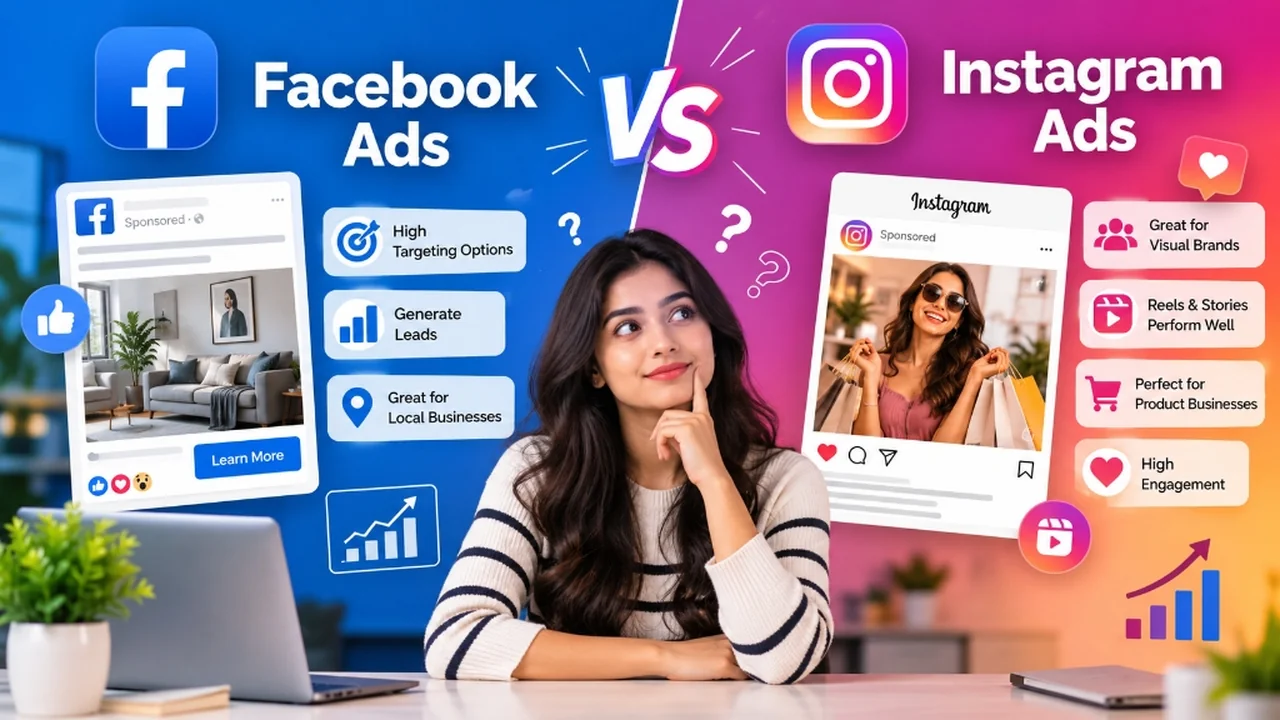
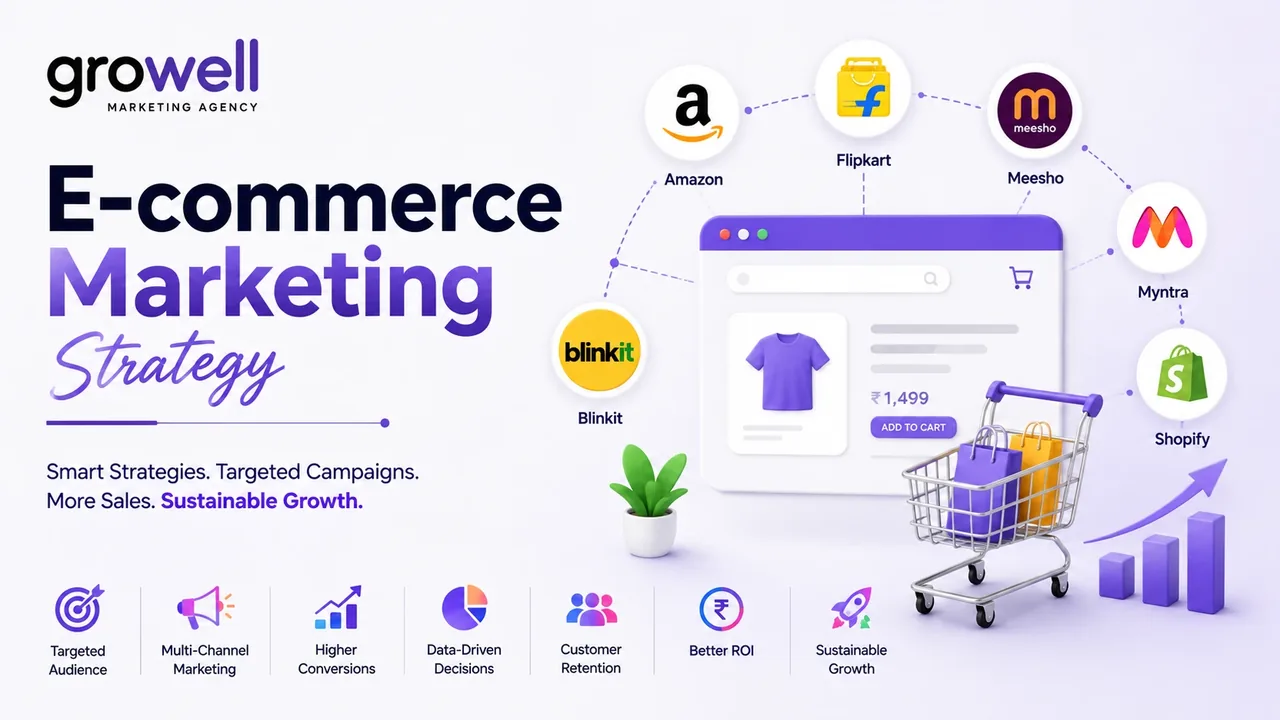
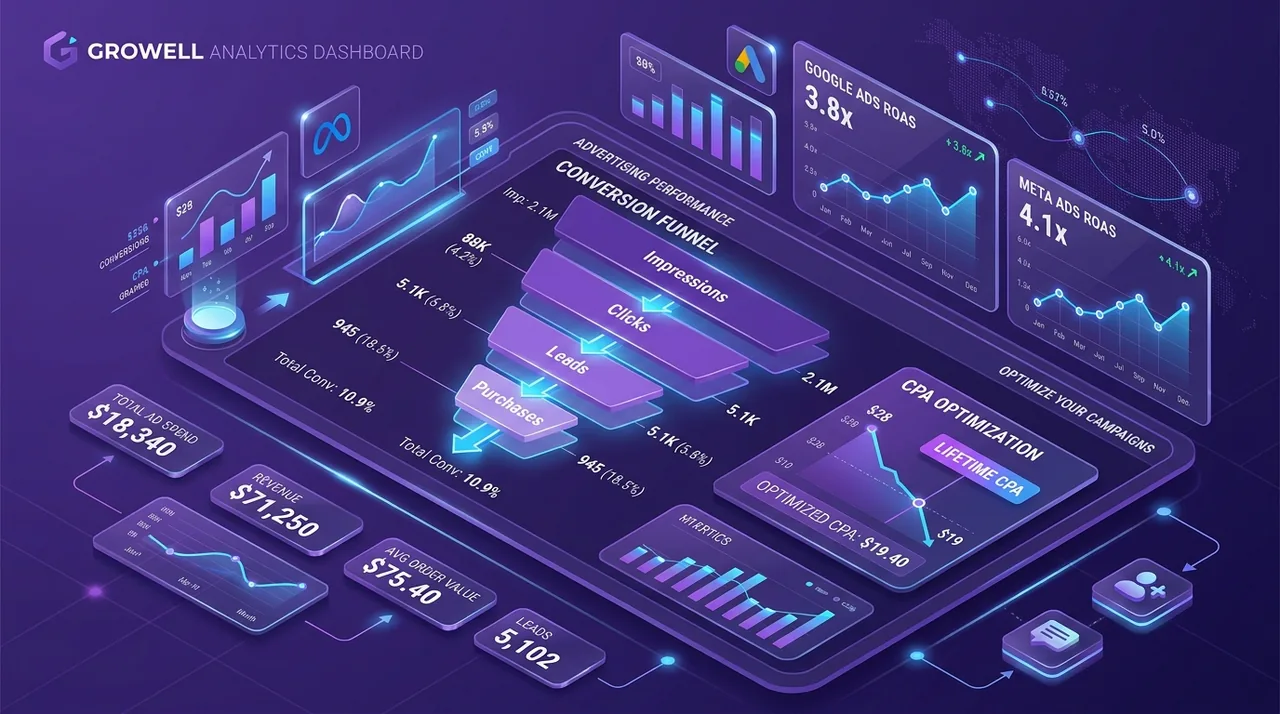
For more strategies on growing your business through paid channels, explore our guides on Facebook Ads vs Instagram Ads: Which Is Better?, building an E-Commerce Marketing Strategy That Actually Drives Sales, and resolving rising ad costs with our playbook on Why Your CPA Is Rising & How to Fix It.
Frequently Asked Questions (FAQs)
Why are Meta Ads effective for e-commerce brands?
Meta Ads combine Facebook and Instagram's massive visual inventory with machine-learning algorithms (Advantage+ Suite). They allow e-commerce stores to reach prospective buyers based on real-time behavior, visual interest, and shopping intent, driving both cold acquisition and cart-abandonment recovery.
What is the best audience targeting strategy for e-commerce in 2026?
In modern Meta advertising, creative acts as the primary targeting mechanism. Broad targeting combined with Advantage+ Shopping Campaigns (ASC) generally outperforms narrow interest stacking, as Meta's machine learning finds buyers faster and at lower CPMs when unrestrained by rigid filters.
How should e-commerce brands retarget website visitors?
Brands should set up Dynamic Product Ads (DPA) and custom audiences segmenting 7-day View Content, 14-day Add to Cart, and 30-day Checkout Initiators. Crucially, always exclude purchasers from the past 30-60 days to prevent ad fatigue and wasted budget.
What ad creatives perform best for e-commerce stores?
Short-form vertical video (9:16 Reels), UGC (User-Generated Content), authentic customer unboxings, split-screen problem/solution demonstrations, and multi-card carousel reviews consistently produce the highest conversion rates.
How do I ensure my Meta Ads are genuinely profitable?
Track blended Marketing Efficiency Ratio (MER = Total Store Revenue / Total Ad Spend) alongside contribution margins, Cost of Goods Sold (COGS), shipping fees, and customer repeat purchase rates, rather than relying solely on platform-reported in-app ROAS.